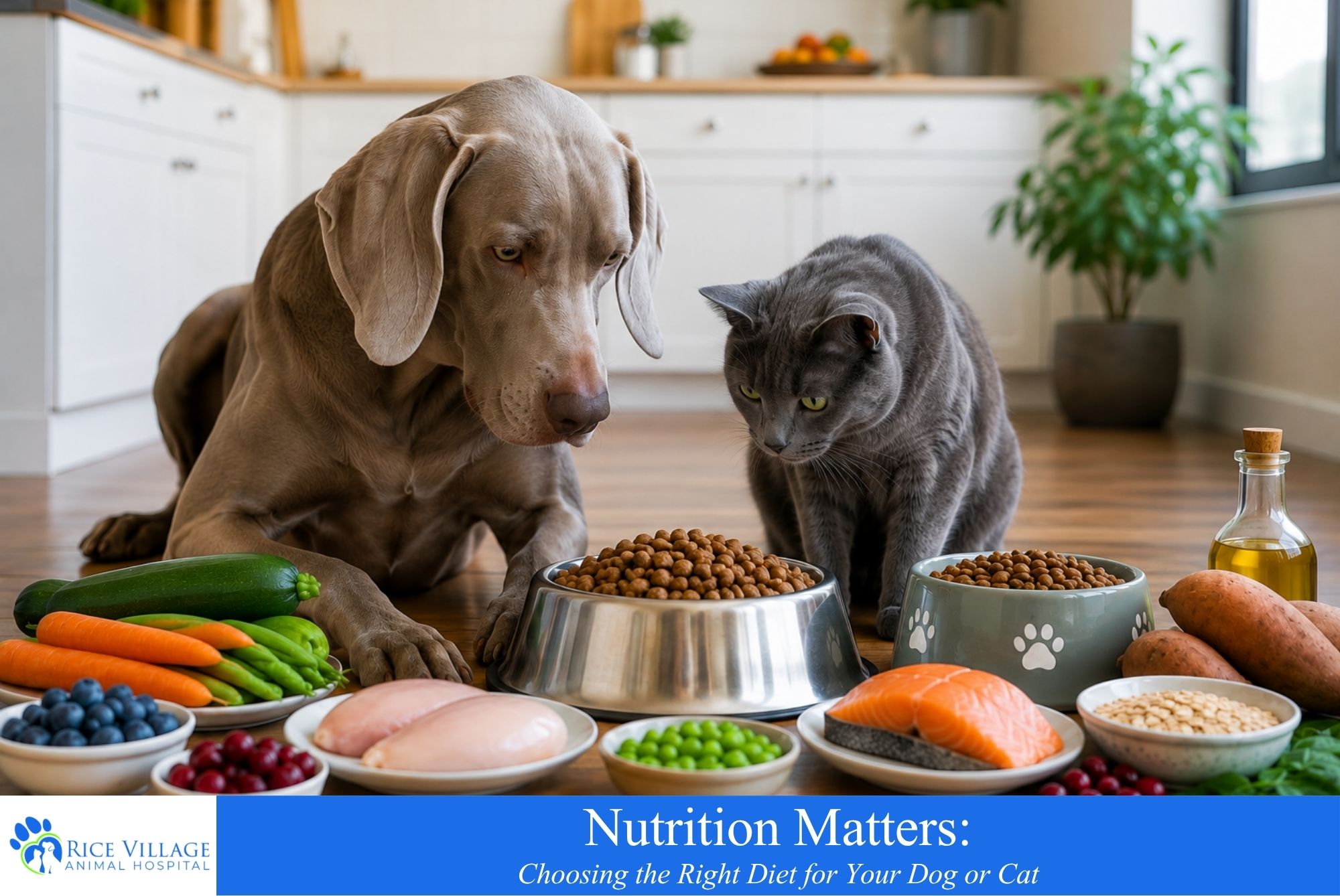
 Proper nutrition is one of the most important factors influencing your pet’s overall health, longevity, and quality of life. Every meal your dog or cat eats contributes to healthy growth, immune function, weight management, organ health, and disease prevention. With countless pet food brands, conflicting online advice, and ever-changing diet trends, it can be difficult for pet owners to determine what is truly best for their companion.
At Rice Village Animal Hospital, we believe nutrition should be personalized. Every pet has unique dietary needs based on species, age, breed, activity level, medical history, and lifestyle. A puppy has different nutritional requirements than a senior dog, and a healthy indoor cat requires a different diet than one managing diabetes or kidney disease. Working with your veterinarian ensures your pet receives balanced nutrition tailored specifically to their needs.
This guide explains life-stage nutrition, how to interpret pet food labels, the truth about grain-free diets, prescription nutrition, healthy treats, and when professional nutritional counseling can make a significant difference.
Why Nutrition Is One of the Most Important Parts of Preventive Veterinary Care
Nutrition affects nearly every system in your pet’s body. Proper diets support:
- Healthy growth and development
- Strong muscles and bones
- Brain development
- Healthy skin and coat
- Digestive health
- Immune system function
- Healthy body weight
- Joint mobility
- Heart health
- Kidney and liver function
- Longevity
Poor nutrition can contribute to obesity, diabetes, arthritis, urinary disease, gastrointestinal disorders, heart disease, dental disease, skin problems, and shortened lifespan.
Rather than waiting until illness develops, preventive nutrition helps keep pets healthier throughout every stage of life.
Why One Diet Does Not Fit Every Pet
Every pet has unique nutritional needs influenced by numerous factors.
Species Differences
Dogs are omnivores that thrive on balanced diets containing animal proteins, carbohydrates, healthy fats, vitamins, and minerals.
Cats are obligate carnivores, meaning they require nutrients found primarily in animal tissues, including:
- Taurine
- Arachidonic acid
- Vitamin A from animal sources
- High-quality animal protein
Cats cannot safely thrive on vegetarian or vegan diets without careful veterinary formulation.
Life-Stage Nutrition Matters
Puppies and Kittens
Growing pets require:
- Higher calorie intake
- Increased protein
- Appropriate calcium and phosphorus balance
- DHA for brain development
- Controlled growth for large-breed puppies
Proper nutrition during growth helps prevent developmental orthopedic disease and supports lifelong health.
Adult Dogs and Cats
Healthy adults require maintenance diets that provide:
- Balanced nutrition
- Healthy body weight
- Lean muscle maintenance
- Appropriate energy levels
Activity level also matters. Working dogs, athletic pets, and indoor pets have very different calorie requirements.
Senior Pets
Older pets often benefit from diets formulated to support:
- Joint health
- Kidney function
- Cognitive health
- Lean muscle maintenance
- Digestive health
- Immune function
Senior nutrition may help improve comfort and maintain quality of life as pets age.
How to Read Pet Food Labels
Pet food labels contain valuable information, but understanding them requires knowing what to look for.
Look for an AAFCO Nutritional Statement
Choose foods that state they are complete and balanced according to AAFCO nutritional standards for your pet’s life stage.
This indicates the food provides appropriate nutrition when fed as directed.
Ingredients Are Listed by Weight
Ingredients appear in descending order by weight before cooking.
Fresh meats contain significant moisture, so ingredient order alone does not determine food quality.
Veterinarians evaluate the entire nutritional profile rather than focusing solely on the first ingredient.
Guaranteed Analysis
This section lists minimum or maximum percentages for:
- Protein
- Fat
- Fiber
- Moisture
Although helpful, guaranteed analysis does not provide complete nutritional quality or digestibility.
Feeding Guidelines
Package feeding recommendations are starting points only.
Individual calorie needs vary depending on:
- Activity
- Breed
- Age
- Metabolism
- Medical conditions
- Spay or neuter status
Your veterinarian can calculate more accurate daily calorie requirements.
Understanding High-Quality Protein
Protein supports:
- Muscle maintenance
- Immune function
- Organ health
- Hormone production
- Skin repair
- Hair growth
High-quality animal proteins generally provide excellent digestibility and essential amino acids.
Protein needs vary depending on life stage and medical conditions.
The Truth About Grain-Free Diets
Grain-free diets have become increasingly popular, but they are not automatically healthier.
Common Misconceptions
Many owners believe grains commonly cause allergies.
In reality, true grain allergies are uncommon in dogs and cats.
Food allergies more frequently involve animal proteins such as:
- Beef
- Chicken
- Dairy
- Eggs
FDA Investigation and Heart Disease
The FDA has investigated possible links between certain grain-free diets and dilated cardiomyopathy (DCM) in some dogs.
Although research continues, veterinarians generally recommend choosing diets supported by nutritional science rather than marketing trends.
Unless medically indicated, grain-free diets are usually unnecessary.
Raw Diets: Are They Safe?
Some owners choose raw diets believing they are more natural.
Potential concerns include:
- Salmonella
- E. coli
- Listeria
- Nutritional imbalances
- Bone fractures
- Gastrointestinal obstruction
Raw diets may also pose risks to children, elderly individuals, and immunocompromised family members through bacterial contamination.
If you are interested in feeding a raw diet, discuss safe nutritional planning with your veterinarian first.
Prescription Diets Can Treat Medical Conditions
Prescription therapeutic diets are scientifically formulated to help manage specific diseases.
Common examples include:
Kidney Disease
Specialized diets often contain:
- Controlled phosphorus
- Adjusted protein
- Omega-3 fatty acids
These nutritional adjustments can help support kidney function.
Urinary Disease
Prescription urinary diets help:
- Dissolve certain bladder stones
- Reduce crystal formation
- Promote healthy urine composition
Diabetes
Diabetic diets support:
- Stable blood sugar
- Weight management
- Consistent calorie intake
Food Allergies
Hydrolyzed protein or novel protein diets help diagnose and manage food allergies while reducing immune system reactions.
Gastrointestinal Disease
Digestive diets may include:
- Highly digestible ingredients
- Increased fiber
- Prebiotics
- Probiotics
These diets often improve chronic digestive disorders.
Weight Management Starts with Nutrition
Pet obesity remains one of the most common medical conditions seen by veterinarians.
Even modest excess weight increases the risk of:
- Arthritis
- Diabetes
- Heart disease
- Respiratory problems
- Reduced lifespan
- Surgical complications
Your veterinarian can calculate your pet’s ideal calorie intake and recommend an appropriate weight-loss or maintenance diet.
Healthy Treats Still Count
Treats should make up no more than approximately 10% of your pet’s daily calories.
Healthy options may include:
For dogs:
- Baby carrots
- Green beans
- Apple slices without seeds
- Blueberries
For cats:
- Small pieces of cooked chicken
- Freeze-dried meat treats
- Veterinary-approved treats
Avoid excessive table scraps, fatty foods, chocolate, onions, grapes, raisins, xylitol-containing products, and foods toxic to pets.
Water Is an Essential Nutrient
Proper hydration supports:
- Kidney health
- Digestion
- Temperature regulation
- Circulation
- Urinary health
Always provide fresh, clean water.
Cats often benefit from:
- Water fountains
- Wet food
- Multiple water stations throughout the home
Nutritional Supplements: Are They Necessary?
Most healthy pets eating complete and balanced diets do not require additional supplements.
Some pets may benefit from veterinarian-recommended supplements, including:
- Omega-3 fatty acids
- Joint support products
- Probiotics
- Fiber supplements
- Prescription vitamins
Avoid adding supplements without veterinary guidance, as excessive supplementation can be harmful.
Signs Your Pet’s Diet May Need to Change
Watch for changes such as:
- Weight gain
- Weight loss
- Poor coat quality
- Excessive shedding
- Chronic itching
- Vomiting
- Diarrhea
- Constipation
- Reduced energy
- Increased thirst
- Poor appetite
- Frequent ear infections
- Flatulence
These symptoms may indicate nutritional problems or underlying medical conditions requiring veterinary evaluation.
When Nutritional Counseling Is Beneficial
Professional nutritional counseling can help if your pet:
- Is overweight or underweight
- Has chronic medical conditions
- Has food allergies
- Needs a prescription diet
- Is transitioning between life stages
- Is a picky eater
- Has digestive problems
- Has kidney disease
- Has diabetes
- Is recovering from surgery
- Is pregnant or nursing
- Is an athletic or working animal
Personalized recommendations help ensure your pet receives optimal nutrition throughout life.
Building a Long-Term Nutrition Plan
A successful nutrition plan involves more than choosing a bag of food.
Your veterinarian considers:
- Body condition score
- Muscle condition
- Current health status
- Bloodwork results
- Lifestyle
- Breed predispositions
- Medical history
- Age
- Weight goals
Routine wellness examinations allow nutritional recommendations to evolve as your pet’s needs change.
Investing in proper nutrition today helps support a healthier, happier companion for years to come.
Frequently Asked Questions
How do I know if my pet is eating the right food?
A healthy pet typically maintains an ideal body weight, has good energy, healthy skin and coat, normal digestion, and receives positive evaluations during regular veterinary exams. Your veterinarian can determine whether your pet’s current diet meets their nutritional needs.
Is expensive pet food always better?
Not necessarily. Price alone does not indicate nutritional quality. The best diet is one that is complete, balanced, appropriate for your pet’s life stage, and recommended by your veterinarian.
Should I feed wet food or dry food?
Both canned and dry foods can provide complete nutrition. The best choice depends on your pet’s age, dental health, hydration needs, medical conditions, and personal preferences.
Are homemade diets healthy?
Homemade diets can be appropriate when formulated by a veterinary nutrition expert. Improperly balanced homemade diets can lead to serious nutritional deficiencies or excesses.
Is grain-free food better for pets with allergies?
Usually not. Most food allergies involve proteins rather than grains. Your veterinarian can help determine whether a prescription elimination diet is needed.
When should my puppy or kitten switch to adult food?
Most pets transition to adult diets around one year of age, although large-breed dogs often remain on puppy food longer. Your veterinarian can recommend the ideal transition time.
How often should my pet’s diet be reevaluated?
Nutrition should be reviewed during every wellness examination and anytime your pet develops a new medical condition, gains or loses weight, or enters a new life stage.
Are treats bad for pets?
Treats are perfectly acceptable in moderation. They should account for no more than about 10% of your pet’s daily calorie intake and should complement a balanced diet rather than replace it.
Can prescription diets really make a difference?
Yes. Prescription diets are scientifically formulated to help manage many chronic conditions, including kidney disease, urinary disease, diabetes, gastrointestinal disorders, obesity, and food allergies.
Should I talk to my veterinarian before changing my pet’s food?
Absolutely. Sudden diet changes or selecting an inappropriate food can contribute to digestive upset or nutritional imbalances. Your veterinarian can recommend the safest and healthiest option for your pet.
Contact Information
Rice Village Animal Hospital
2348 Rice Blvd
Houston, TX 77005
Phone: (713) 527-0489
Website: https://rvahpet.com
Request an Appointment: https://rvahpet.com/appointments