
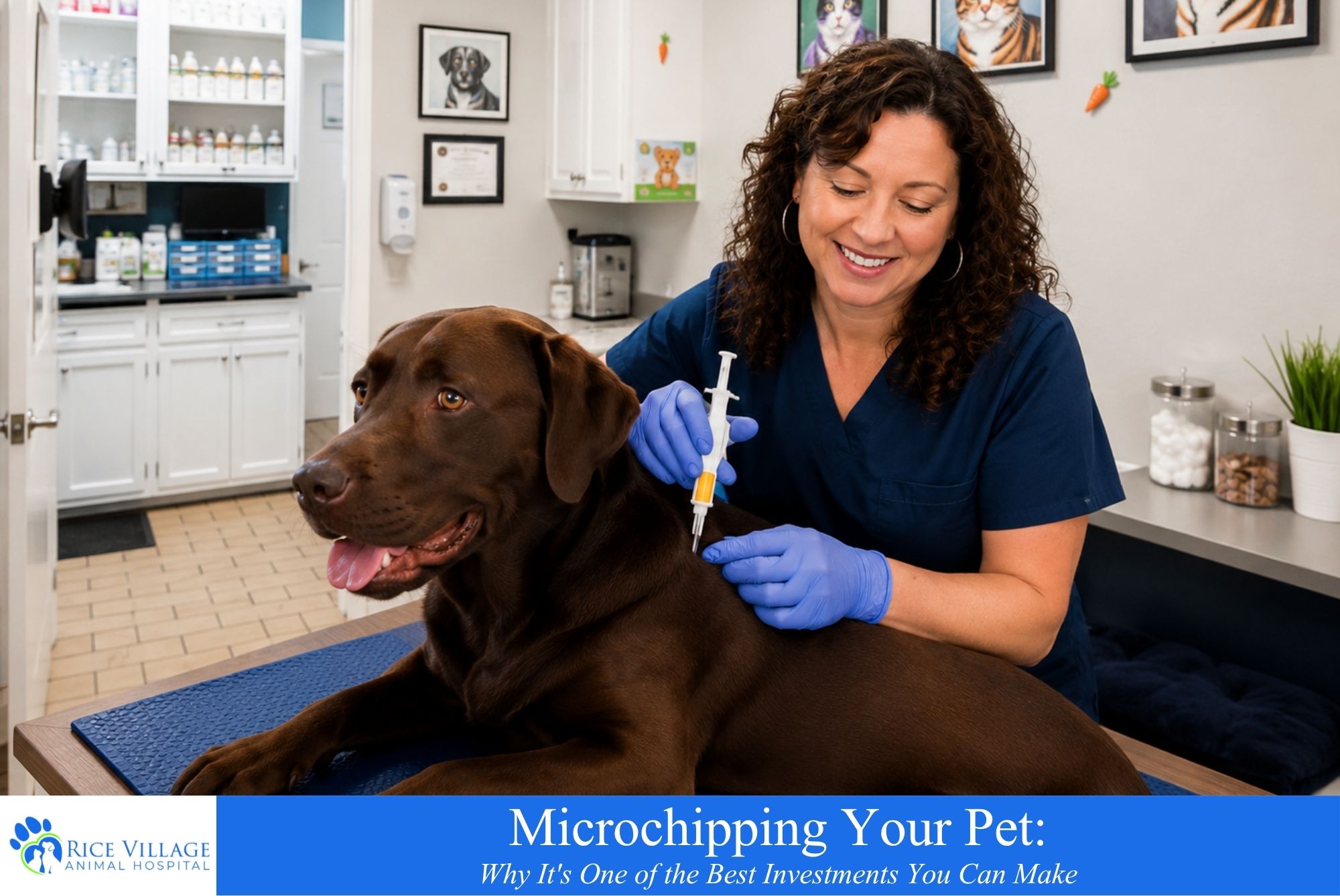
 Every year, thousands of beloved pets become lost due to open gates, damaged fences, unexpected storms, fireworks, travel, or simple accidents. While collars and ID tags are valuable, they can break, slip off, or become unreadable over time. A microchip provides a permanent form of identification that significantly increases the chances of a lost pet being reunited with its family.
For pet owners in Houston, TX, microchipping is one of the safest, simplest, and most affordable ways to protect a lifelong companion. At Rice Village Animal Hospital, we encourage microchipping as an essential part of preventive veterinary care for both dogs and cats. Whether you have a playful puppy, a curious kitten, or a senior pet, a microchip provides an extra layer of security that remains with your pet for life.
What Is a Pet Microchip?
A pet microchip is a tiny electronic identification device, approximately the size of a grain of rice, that is implanted just beneath the skin, typically between the shoulder blades. Each microchip contains a unique identification number that can be read by a universal microchip scanner used by veterinary hospitals, animal shelters, and animal control agencies.
Unlike GPS devices, a microchip does not transmit your pet’s location or require batteries. Instead, it serves as a permanent identification number that links to your contact information in a secure registration database.
The microchip itself is made from biocompatible materials designed to remain safely under the skin without causing discomfort or interfering with your pet’s daily activities.
How Pet Microchips Work
When a lost pet is found, veterinary clinics and shelters routinely scan the entire body for a microchip. The scanner emits a harmless radio frequency that activates the chip momentarily, allowing the unique identification number to appear on the scanner.
The identification number is then searched within the appropriate registration database to retrieve the owner’s contact information. If the registration is current, veterinary professionals can quickly contact the owner and facilitate a reunion.
The process takes only a few seconds and is completely painless for the pet.
Why Microchipping Is One of the Best Investments You Can Make
Microchipping offers lifelong protection that continues working even if your pet loses its collar or tags.
Permanent Identification
Unlike collars, which can fall off during play or emergencies, a microchip remains with your pet for life.
Increased Chances of Being Reunited
Studies have consistently shown that microchipped pets are significantly more likely to be returned to their owners than pets without permanent identification.
For cats, the difference is especially dramatic since many indoor cats that escape outdoors are not wearing collars.
Quick Identification During Emergencies
Natural disasters, severe weather, house fires, or evacuation situations can separate pets from their families unexpectedly. A microchip provides reliable identification during these stressful situations.
Affordable Lifelong Protection
Compared to the emotional and financial costs of losing a pet permanently, microchipping is an inexpensive one-time procedure that offers lifelong benefits.
Peace of Mind
Knowing your pet has permanent identification provides reassurance every time they leave the house, travel with you, or visit boarding facilities, groomers, or parks.
The Microchipping Procedure
Many pet owners are surprised by how quick and simple the process is.
The veterinarian or veterinary technician uses a sterile applicator to place the microchip beneath the skin. The procedure is similar to receiving a routine vaccination and usually takes only a few seconds.
Most pets tolerate implantation extremely well without sedation or anesthesia.
After placement, the veterinarian scans the chip to verify it is functioning correctly and provides the owner with registration instructions.
Does Microchipping Hurt?
The discomfort associated with microchip placement is minimal and comparable to receiving a vaccine.
Most dogs and cats react only briefly, if at all. Once implanted, pets generally do not notice the microchip.
The chip remains comfortably beneath the skin without affecting movement, activity levels, or quality of life.
Common Misconceptions About Pet Microchips
“A Microchip Is a GPS Tracker.”
This is one of the most common myths.
Microchips cannot track your pet’s location. They only contain a unique identification number that can be read with a scanner.
“My Pet Never Goes Outside.”
Indoor pets can still escape through open doors, damaged screens, moving day accidents, or emergencies.
Cats are especially skilled at slipping outdoors unnoticed.
Even pets that spend nearly all of their time indoors benefit from permanent identification.
“My Pet Already Has a Collar.”
Collars and tags remain extremely important.
However, collars can become damaged, removed, or lost. Microchips provide permanent backup identification that cannot be separated from your pet.
The best protection comes from using both collars and microchips together.
“Microchips Stop Working.”
Modern veterinary microchips are designed to function for the life of the pet.
Routine veterinary visits often include scanning the chip to verify it remains readable.
Why Registration Is Just as Important as Implantation
A microchip only works if the registration information is accurate.
After implantation, pet owners must register the microchip with the manufacturer’s database and ensure all information remains current.
If you move, change your phone number, switch email addresses, or transfer ownership of a pet, the database should be updated immediately.
An unregistered microchip or one with outdated contact information can delay or even prevent a successful reunion.
When Should Pets Receive a Microchip?
Microchipping can be performed at almost any age.
Many puppies and kittens receive microchips during their initial wellness visits or at the time of spay or neuter surgery.
Adult and senior pets that have never been microchipped can safely receive one during a routine wellness examination.
It is never too late to give your pet permanent identification.
Are There Any Risks?
Microchipping has been safely performed in millions of pets worldwide.
Complications are extremely rare.
Occasionally, a microchip may migrate slightly beneath the skin, but this rarely affects its function because veterinary professionals routinely scan the entire body when checking for microchips.
Overall, the benefits of permanent identification greatly outweigh the minimal risks.
Additional Ways to Protect Your Pet
Microchipping should be part of a complete identification and safety plan.
Consider combining permanent identification with:
- A properly fitted collar
- Durable ID tags with current phone numbers
- Current rabies identification tags
- Secure fencing and gates
- Leash use in public areas
- Updated photographs of your pet
- Routine wellness examinations
Together, these measures provide the highest level of protection should your pet ever become separated from your family.
Why Choose Rice Village Animal Hospital for Pet Microchipping?
At Rice Village Animal Hospital, our veterinary team understands that pets are cherished members of the family. We offer safe, professional microchipping services as part of our commitment to preventive veterinary care.
Our team ensures proper implantation, confirms the chip is functioning correctly, and helps owners understand the importance of registration and maintaining current contact information.
Whether you have a new puppy, an adopted cat, or an older companion who has never been microchipped, we are here to help provide lifelong protection for your pet.
Frequently Asked Questions
Is microchipping required by law?
Requirements vary depending on local regulations and specific circumstances. Even where it is not legally required, veterinarians strongly recommend microchipping because it significantly improves the chances of recovering a lost pet.
Can I feel my pet’s microchip?
Sometimes you may be able to feel a small bump beneath the skin between the shoulder blades, but many owners never notice it.
Can a microchip be removed?
Microchips are intended to remain in place permanently. Removal is rarely necessary and is generally only performed for unusual medical reasons.
Does my pet need anesthesia for a microchip?
No. The procedure is quick and similar to receiving a routine vaccination.
Can microchips fail?
Modern microchips are highly reliable. During routine veterinary visits, your veterinarian can scan the chip to verify it is functioning properly.
How do I update my registration information?
Contact the microchip registration company directly through its website or customer service line whenever your address, phone number, or email changes.
Will a microchip replace my pet’s collar?
No. A collar with identification tags remains important because it allows anyone who finds your pet to contact you immediately without visiting a veterinary clinic or shelter. Microchips provide permanent backup identification.
Can indoor cats benefit from microchipping?
Absolutely. Indoor cats frequently escape unexpectedly, and many are difficult to identify if they are found without a collar.
Is there an age limit for microchipping?
No. Healthy pets of nearly any age can safely receive a microchip.
How long does a pet microchip last?
Microchips are designed to function for the lifetime of your pet without requiring batteries, charging, or maintenance.
Contact Information
Rice Village Animal Hospital
2348 Rice Blvd
Houston, TX 77005
Phone: (713) 527-0489
Website: https://rvahpet.com
Request An Appointment: https://rvahpet.com/appointments