
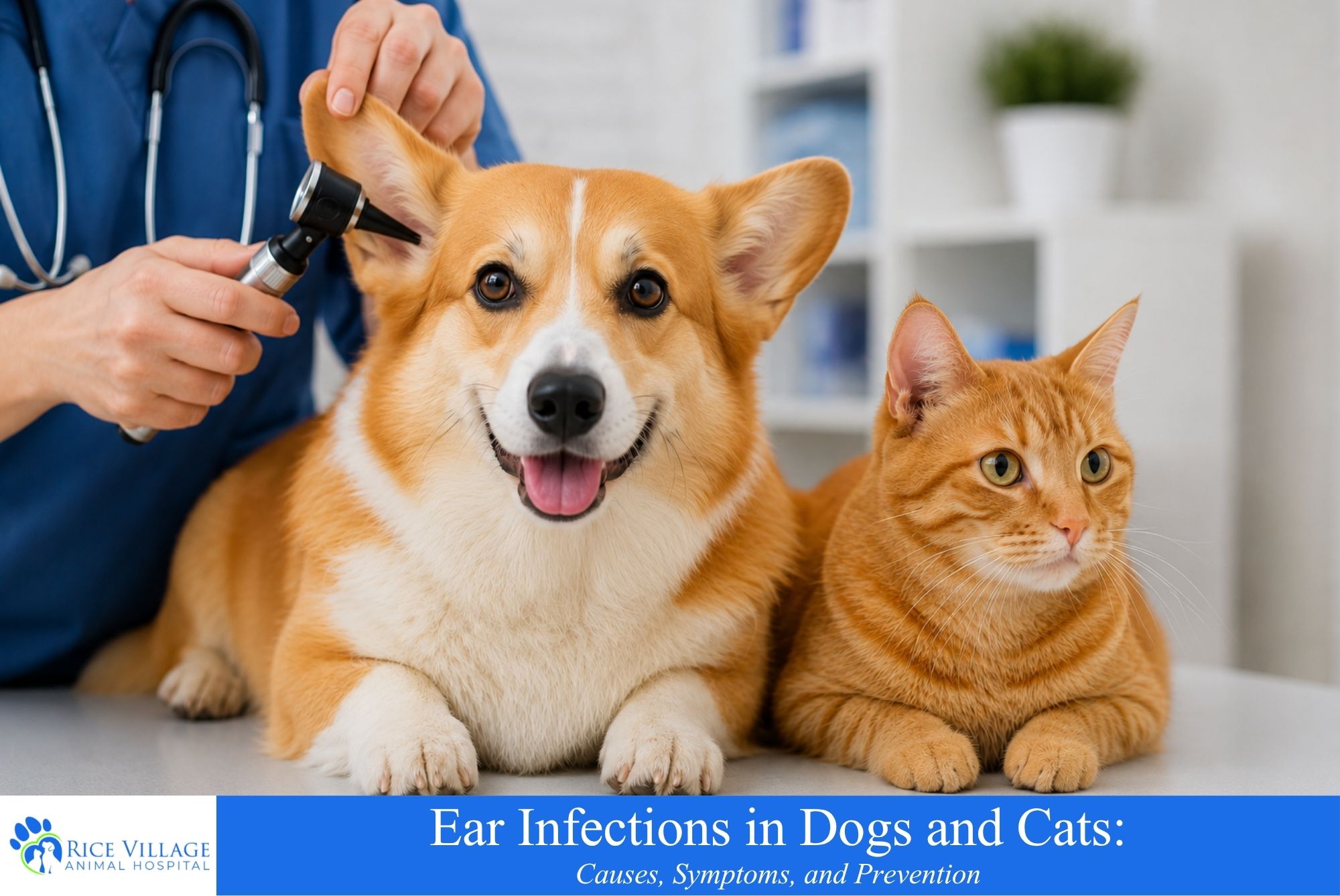
 Ear infections are among the most common reasons dogs and cats visit the veterinarian. While many pet owners notice symptoms such as excessive scratching or head shaking, ear infections often begin long before these visible signs appear. Without prompt treatment, infections can become painful, recur frequently, or even lead to permanent hearing damage and chronic inflammation.
Understanding what causes ear infections, recognizing the early warning signs, and knowing how to prevent future problems can help protect your pet’s health and comfort. At Rice Village Animal Hospital, our veterinary team provides comprehensive examinations, accurate diagnosis, and individualized treatment plans to help pets throughout Houston enjoy healthy ears and a better quality of life.
Understanding Ear Infections in Pets
An ear infection, medically known as otitis, occurs when bacteria, yeast, parasites, or inflammation affect the ear canal. Ear infections can involve different portions of the ear, including:
Otitis Externa
Otitis externa affects the outer ear canal and is the most common type of ear infection seen in both dogs and cats. Early diagnosis typically leads to faster recovery and fewer complications.
Otitis Media
When an untreated outer ear infection spreads deeper, it can affect the middle ear. This condition often requires more advanced treatment and may be associated with significant pain.
Otitis Interna
The inner ear contains structures responsible for hearing and balance. Infections that reach this area are considered serious and may result in hearing loss, balance disorders, or neurological symptoms.
Why Dogs Experience Ear Infections More Often Than Cats
Although both species develop ear infections, dogs generally experience them more frequently due to differences in ear anatomy.
Many dog breeds have:
- Long, floppy ears
- Narrow ear canals
- Hair growing inside the ears
- Increased moisture retention
These characteristics create a warm, humid environment where bacteria and yeast can thrive.
Cats are less likely to develop ear infections, but when they do, veterinarians often investigate underlying causes such as ear mites, allergies, polyps, or immune-related conditions.
Common Causes of Ear Infections
Ear infections are usually the result of an underlying condition rather than a problem by themselves.
Allergies
Environmental allergies and food allergies are among the leading causes of recurring ear infections.
Common allergens include:
- Grass pollen
- Tree pollen
- Mold spores
- Dust mites
- Certain proteins in food
Pets with allergies develop chronic inflammation inside the ear canal, making infections much more likely.
Moisture
Moisture trapped inside the ears creates an ideal environment for yeast and bacteria.
Common sources include:
- Swimming
- Frequent bathing
- High humidity
- Excessive ear cleaning without proper drying
Houston’s warm, humid climate can contribute to increased moisture buildup, especially during much of the year.
Ear Mites
Ear mites are highly contagious microscopic parasites that commonly affect:
- Kittens
- Outdoor cats
- Puppies
- Shelter animals
These parasites cause intense itching, inflammation, and dark debris inside the ears. Left untreated, they often lead to secondary bacterial or yeast infections.
Bacteria
Healthy ears naturally contain small amounts of bacteria. When inflammation or excess moisture develops, bacterial populations can grow rapidly and cause painful infections.
Several bacterial species commonly affect dogs and cats, and identifying the specific organism helps veterinarians choose the most effective medication.
Yeast Overgrowth
Yeast normally lives on healthy skin, but inflammation and moisture allow it to multiply excessively.
Yeast infections often produce:
- Strong odor
- Brown discharge
- Red, irritated ears
- Persistent itching
Ear Anatomy
Certain breeds have naturally higher risks due to their ear structure.
Examples include:
- Cocker Spaniels
- Basset Hounds
- Labrador Retrievers
- Golden Retrievers
- Poodles
- Shar-Peis
Even dogs with upright ears can develop infections if underlying allergies or skin conditions are present.
Foreign Material
Grass awns, plant material, dirt, or other debris can become lodged inside the ear canal, causing irritation and infection.
Polyps and Tumors
Less commonly, growths within the ear canal interfere with airflow and drainage, increasing infection risk.
Symptoms of Ear Infections
Early recognition allows treatment before the infection becomes severe.
Common symptoms include:
Head Shaking
Frequent or vigorous head shaking is often one of the first signs owners notice.
Excessive Ear Scratching
Pets may scratch one or both ears repeatedly due to irritation and itchiness.
Redness
Healthy ears appear light pink. Bright red or swollen ear canals suggest inflammation.
Odor
A strong, unpleasant smell frequently accompanies bacterial or yeast infections.
Ear Discharge
Discharge may appear:
- Brown
- Yellow
- Black
- Green
- Thick
- Waxy
The appearance often provides clues about the underlying cause.
Pain
Pets with painful ears may:
- Cry when touched
- Pull away during petting
- Avoid head handling
- Become irritable
Swelling
Inflammation may cause the ear canal to become swollen and narrow.
Balance Problems
If an infection spreads into the inner ear, pets may develop:
- Head tilt
- Loss of balance
- Circling
- Difficulty walking
- Rapid eye movements
These symptoms require immediate veterinary evaluation.
Signs That Require Immediate Veterinary Care
Seek prompt veterinary attention if your pet experiences:
- Severe pain
- Persistent head shaking
- Bloody discharge
- Foul odor
- Swollen ears
- Hearing loss
- Loss of balance
- Head tilt
- Facial paralysis
- Symptoms lasting more than one day
- Recurrent ear infections
Delaying treatment often allows infections to worsen and increases the likelihood of chronic disease.
How Veterinarians Diagnose Ear Infections
Proper diagnosis identifies both the infection and its underlying cause.
Your veterinarian may perform:
Physical Examination
A complete examination evaluates your pet’s overall health and identifies possible allergy or skin disease.
Otoscopic Examination
An otoscope allows the veterinarian to visualize the ear canal and eardrum while checking for:
- Inflammation
- Foreign objects
- Polyps
- Ruptured eardrums
- Excess debris
Ear Cytology
Samples collected from the ear are examined under a microscope to identify:
- Yeast
- Bacteria
- Ear mites
- Inflammatory cells
Cytology guides medication selection and improves treatment success.
Culture and Sensitivity Testing
For severe or recurring infections, laboratory testing determines which antibiotics are most effective against the bacteria present.
Allergy Evaluation
Pets with repeated infections often benefit from allergy testing or dietary elimination trials to identify long-term triggers.
Treatment Options
Treatment depends on the cause, severity, and location of the infection.
Professional Ear Cleaning
Removing debris allows medications to reach infected tissues more effectively.
Veterinary cleaning is often much safer and more thorough than home cleaning, particularly when the ear is painful.
Prescription Medications
Treatment may include:
- Antibiotic ear medications
- Antifungal medications
- Anti-inflammatory medications
- Oral antibiotics
- Oral antifungal medications
- Pain relief medications
Parasite Treatment
Ear mite infestations require medications that eliminate parasites while also treating secondary infections if present.
Allergy Management
Long-term allergy control often prevents repeated ear infections.
Management may include:
- Allergy medications
- Prescription diets
- Immunotherapy
- Routine monitoring
Preventing Ear Infections
Many ear infections can be prevented through routine care and early intervention.
Regular Ear Checks
Examine your pet’s ears every week for:
- Redness
- Odor
- Wax buildup
- Swelling
- Discharge
Dry Ears After Swimming
Carefully dry your pet’s ears after:
- Swimming
- Bathing
- Grooming
Reducing moisture helps prevent yeast and bacterial growth.
Use Veterinary-Approved Ear Cleaners
Only use ear cleaning products recommended by your veterinarian.
Avoid:
- Alcohol
- Hydrogen peroxide
- Cotton swabs inserted into the ear canal
These can damage delicate tissues or push debris deeper.
Manage Allergies
Controlling allergies significantly reduces chronic inflammation and recurring infections.
Schedule Routine Wellness Exams
Routine veterinary examinations help identify early ear changes before they become serious infections.
Why Professional Treatment Matters
Home remedies rarely address the underlying cause of ear infections and may worsen the condition.
Without appropriate treatment, chronic infections can lead to:
- Thickened ear canals
- Permanent scarring
- Hearing loss
- Chronic pain
- Repeated infections
- Surgical intervention
Veterinary evaluation ensures your pet receives the correct diagnosis and treatment before complications develop.
Keeping Your Pet Comfortable and Healthy
Ear infections are uncomfortable, but they are highly treatable when recognized early. Paying attention to changes in your pet’s behavior, scheduling routine wellness visits, and addressing allergies or other underlying conditions can dramatically reduce the risk of recurring infections.
Whether your pet is scratching their ears, shaking their head, or simply seems uncomfortable, the experienced team at Rice Village Animal Hospital is here to help. Through thorough diagnostics, compassionate care, and personalized treatment plans, we help dogs and cats throughout Houston maintain healthy ears and lifelong comfort.
Frequently Asked Questions
How do I know if my dog’s ear infection is serious?
If your dog has severe pain, foul-smelling discharge, swelling, balance problems, head tilt, or symptoms that persist despite cleaning, they should be examined by a veterinarian as soon as possible.
Can cats get ear infections?
Yes. Although ear infections are less common in cats than dogs, they can occur due to ear mites, allergies, polyps, bacteria, yeast, or underlying illnesses.
Can I treat my pet’s ear infection at home?
No. Home remedies rarely eliminate the underlying infection and may worsen the condition. Veterinary diagnosis is necessary to determine the appropriate treatment.
What does a yeast ear infection smell like?
Yeast infections often produce a strong, musty, or sweet odor along with brown discharge and significant itching.
Are ear mites contagious?
Yes. Ear mites spread easily between cats, dogs, and other susceptible animals through close contact.
How often should I clean my pet’s ears?
The ideal cleaning schedule depends on your pet’s breed, lifestyle, and medical history. Your veterinarian can recommend an appropriate routine based on your pet’s individual needs.
Why do ear infections keep coming back?
Recurring ear infections often indicate an underlying problem such as allergies, hormonal disease, chronic moisture, anatomical abnormalities, or incomplete treatment of previous infections.
Can swimming cause ear infections?
Yes. Water trapped inside the ear canal promotes bacterial and yeast growth, making infections more likely, particularly in dogs that swim frequently.
Can ear infections affect my pet’s hearing?
Yes. Chronic or severe infections can damage the ear structures responsible for hearing and balance, potentially causing permanent hearing loss.
When should I schedule a veterinary appointment?
Schedule an appointment whenever your pet shows signs of ear discomfort, scratching, odor, discharge, swelling, head shaking, or changes in balance. Early treatment leads to faster recovery and helps prevent long-term complications.
Contact Information
Rice Village Animal Hospital
2348 Rice Blvd
Houston, TX 77005
Phone: (713) 527-0489
Website: https://rvahpet.com
Request an Appointment: https://rvahpet.com/appointments