
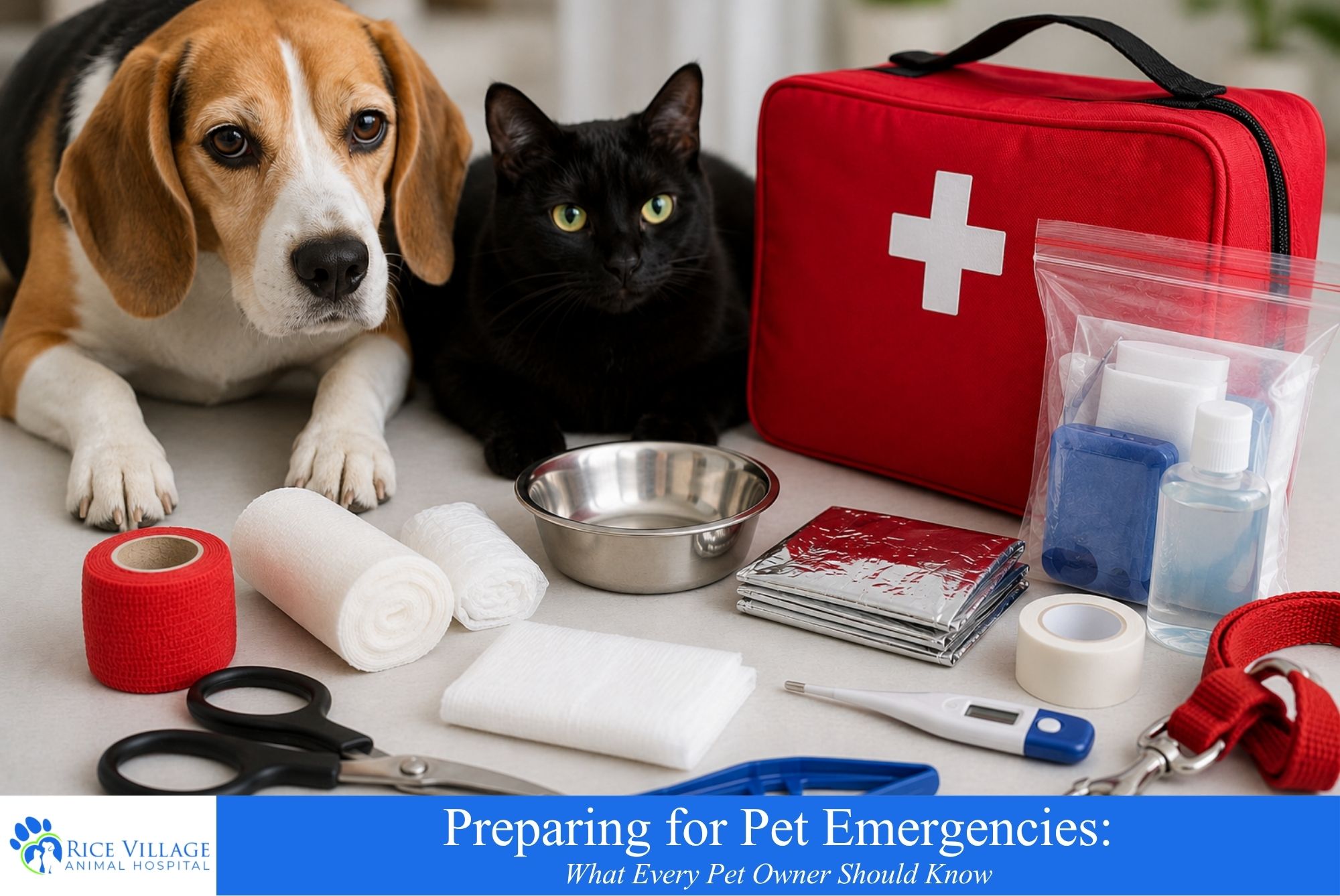
 Pet emergencies often happen without warning. Whether your dog swallows a toxic substance, your cat has difficulty breathing, or your pet suffers an injury, knowing how to respond can make a significant difference in the outcome. While no pet owner wants to imagine an emergency, preparing in advance helps you stay calm, act quickly, and provide your companion with the best possible care.
At Rice Village Animal Hospital, we believe that education is one of the most valuable tools pet owners have. Understanding common emergencies, assembling a pet first aid kit, recognizing when immediate veterinary attention is necessary, and knowing what to do before arriving at the clinic can help protect your pet’s health and potentially save their life.
Why Every Pet Owner Should Have an Emergency Plan
Emergencies can occur at any time, regardless of your pet’s age or overall health. Puppies and kittens may ingest dangerous objects, while senior pets may experience sudden medical conditions such as heart disease or seizures. Even healthy adult pets can suffer traumatic injuries or develop unexpected illnesses.
Preparing before an emergency occurs allows you to:
- Respond more confidently during stressful situations.
- Reduce delays in receiving veterinary care.
- Avoid unnecessary complications.
- Improve the chances of a successful recovery.
- Protect your pet during natural disasters or unexpected evacuations.
Every member of your household should know where emergency supplies are stored and have access to important veterinary contact information.
Build a Complete Pet First Aid Kit
A well-stocked pet first aid kit is an essential part of emergency preparedness. While first aid is not a substitute for veterinary treatment, it can help stabilize your pet until professional care is available.
Basic Medical Supplies
Include items such as:
- Sterile gauze pads
- Non-stick bandages
- Self-adhering veterinary wrap
- Adhesive tape
- Cotton balls
- Medical gloves
- Blunt-ended scissors
- Tweezers
- Saline solution for wound flushing
- Digital thermometer (designated for pets)
- Instant cold packs
- Soft towels and blankets
Emergency Equipment
Helpful emergency equipment includes:
- Slip leash
- Muzzle (only if appropriate and safe)
- Flashlight with extra batteries
- Small carrier for cats and small dogs
- Emergency blanket
- Disposable towels
- Clean water
- Collapsible food and water bowls
Important Medical Information
Keep copies of:
- Vaccination records
- Medication lists
- Known allergies
- Microchip number
- Emergency contact numbers
- Your veterinarian’s phone number
- The nearest emergency veterinary hospital
Store these documents in a waterproof folder or digitally on your phone for easy access.
Learn to Recognize Veterinary Emergencies
One of the most important aspects of emergency preparedness is recognizing when your pet requires immediate medical attention.
Difficulty Breathing
Labored breathing, gasping, open-mouth breathing in cats, blue gums, or excessive respiratory effort should always be treated as an emergency.
Uncontrolled Bleeding
Bleeding that cannot be controlled within a few minutes requires immediate veterinary care.
Collapse or Loss of Consciousness
If your pet collapses, becomes unresponsive, or loses consciousness, seek emergency treatment immediately.
Seizures
A single brief seizure should be evaluated promptly, while seizures lasting more than five minutes or multiple seizures occurring close together require emergency veterinary care.
Trauma
Pets involved in:
- Car accidents
- Falls from significant heights
- Animal attacks
- Blunt force injuries
should always receive a veterinary examination, even if they initially appear normal.
Persistent Vomiting or Diarrhea
Repeated vomiting or diarrhea, particularly when accompanied by lethargy, dehydration, blood, or abdominal pain, may indicate a serious condition.
Difficulty Urinating
Straining to urinate or inability to pass urine is especially dangerous in male cats and should never be delayed.
Poisoning
Potential exposure to toxic substances such as:
- Chocolate
- Xylitol
- Grapes or raisins
- Certain medications
- Rodenticides
- Household cleaners
- Toxic plants
- Antifreeze
requires immediate veterinary consultation.
Severe Pain
Signs of pain include:
- Crying
- Reluctance to move
- Hiding
- Aggression
- Trembling
- Rapid breathing
- Restlessness
Pain often signals a significant medical problem that should be evaluated promptly.
Common Household Emergencies
Many emergencies originate inside the home.
Foreign Object Ingestion
Dogs especially enjoy chewing objects such as:
- Toys
- Socks
- Corn cobs
- Bones
- Batteries
- Children’s toys
These items can cause dangerous intestinal blockages or internal injuries.
Heatstroke
Houston’s hot and humid climate increases the risk of heatstroke.
Signs include:
- Excessive panting
- Bright red gums
- Weakness
- Vomiting
- Collapse
- Confusion
Heatstroke is a life-threatening emergency that requires immediate veterinary care.
Allergic Reactions
Severe allergic reactions may cause:
- Facial swelling
- Difficulty breathing
- Hives
- Vomiting
- Collapse
Prompt treatment is essential.
Eye Injuries
Scratches, punctures, chemical exposure, or sudden squinting should never be ignored because eye injuries can worsen rapidly.
What to Do Before Arriving at the Veterinary Hospital
The actions you take before reaching the clinic can significantly impact your pet’s safety.
Stay Calm
Pets often respond to their owner’s emotions. Remaining calm helps reduce your pet’s stress and allows you to think more clearly.
Call the Veterinary Hospital
Whenever possible, contact your veterinarian before arriving.
This allows the veterinary team to:
- Prepare necessary equipment
- Provide immediate instructions
- Estimate your arrival time
- Direct you to emergency care if needed
Transport Your Pet Safely
Cats should be placed in secure carriers.
Small dogs should be transported in carriers whenever possible.
Larger dogs may require:
- A sturdy blanket
- A large towel
- A board for spinal support
- Assistance from another person
Avoid unnecessary movement if fractures or spinal injuries are suspected.
Do Not Give Human Medications
Many medications commonly found in homes are toxic to pets. Never administer pain relievers or other medications unless specifically instructed by a veterinarian.
Do Not Induce Vomiting Without Veterinary Guidance
Although inducing vomiting is appropriate in some poisoning cases, it can be dangerous in others. Certain toxins and sharp objects can cause additional injury if vomited.
Always speak with a veterinary professional before attempting any home treatment.
Preparing for Natural Disasters
Emergency planning should also include disaster preparedness.
Create a pet emergency evacuation kit containing:
- At least one week’s supply of food
- Bottled water
- Medications
- Medical records
- Recent photographs
- Leash and harness
- Carrier
- Waste bags
- Litter and litter box
- Comfort items such as favorite toys or blankets
Ensure your pet’s microchip registration and identification tags remain current.
The Importance of Microchipping
Microchips greatly improve the chances of reuniting lost pets with their families after emergencies or natural disasters.
However, a microchip is only effective if the registration information remains accurate. Be sure to update your address, phone number, and emergency contacts whenever changes occur.
Why Routine Veterinary Care Helps Prevent Emergencies
Many emergencies can be prevented or identified early through routine wellness examinations.
Regular veterinary visits allow your veterinarian to:
- Detect illness before symptoms become severe.
- Monitor chronic conditions.
- Recommend preventive care.
- Update vaccinations.
- Discuss nutrition and weight management.
- Screen for age-related diseases.
Preventive medicine often reduces the likelihood of unexpected emergencies while improving your pet’s long-term health.
How Rice Village Animal Hospital Helps Families Prepare
At Rice Village Animal Hospital, our experienced veterinary team is committed to helping pet owners feel confident and prepared for unexpected situations. We provide comprehensive wellness care, preventive medicine, diagnostics, emergency guidance, microchipping, and personalized recommendations tailored to your pet’s age, breed, and lifestyle.
If you’re unsure whether your pet’s symptoms require immediate attention, contacting our team promptly allows us to help determine the most appropriate next steps.
Frequently Asked Questions
What should every pet owner keep in a pet first aid kit?
A complete kit should include gauze, bandages, gloves, saline solution, tweezers, scissors, towels, a digital thermometer, leash, muzzle when appropriate, emergency contact information, and copies of your pet’s medical records.
How do I know if my pet needs emergency veterinary care?
Difficulty breathing, collapse, seizures, uncontrolled bleeding, poisoning, inability to urinate, severe trauma, persistent vomiting, severe pain, or sudden weakness should all be treated as emergencies requiring immediate veterinary evaluation.
Should I try treating my pet at home first?
Minor injuries may be managed with basic first aid until veterinary care is available, but serious symptoms should never be treated solely at home. Always contact your veterinarian if you are uncertain.
Can I give my pet human pain medication?
No. Many human medications, including ibuprofen, naproxen, and acetaminophen, can be highly toxic to dogs and cats. Only administer medications prescribed or approved by your veterinarian.
Should I make my pet vomit if they eat something poisonous?
Not without veterinary guidance. Some toxins become more dangerous if vomited, and certain objects can cause additional injury. Contact your veterinarian immediately for instructions.
Is heatstroke really an emergency?
Yes. Heatstroke can rapidly lead to organ failure and death if not treated immediately. Move your pet to a cooler environment and seek emergency veterinary care right away.
Why should my pet be microchipped?
Microchips provide permanent identification that significantly improves the likelihood of recovering lost pets, especially during emergencies, natural disasters, or unexpected escapes.
How often should I replace supplies in my pet first aid kit?
Review your kit every six to twelve months. Replace expired supplies, medications, batteries, and any items that have been used.
Can wellness visits reduce emergency situations?
Yes. Regular wellness examinations help identify health concerns early, allowing treatment before conditions become emergencies. Preventive care is one of the best ways to protect your pet’s long-term health.
Contact Information
Rice Village Animal Hospital
2348 Rice Blvd
Houston, TX 77005
Phone: (713) 527-0489
Website: https://rvahpet.com
Request An Appointment: https://rvahpet.com/appointments