
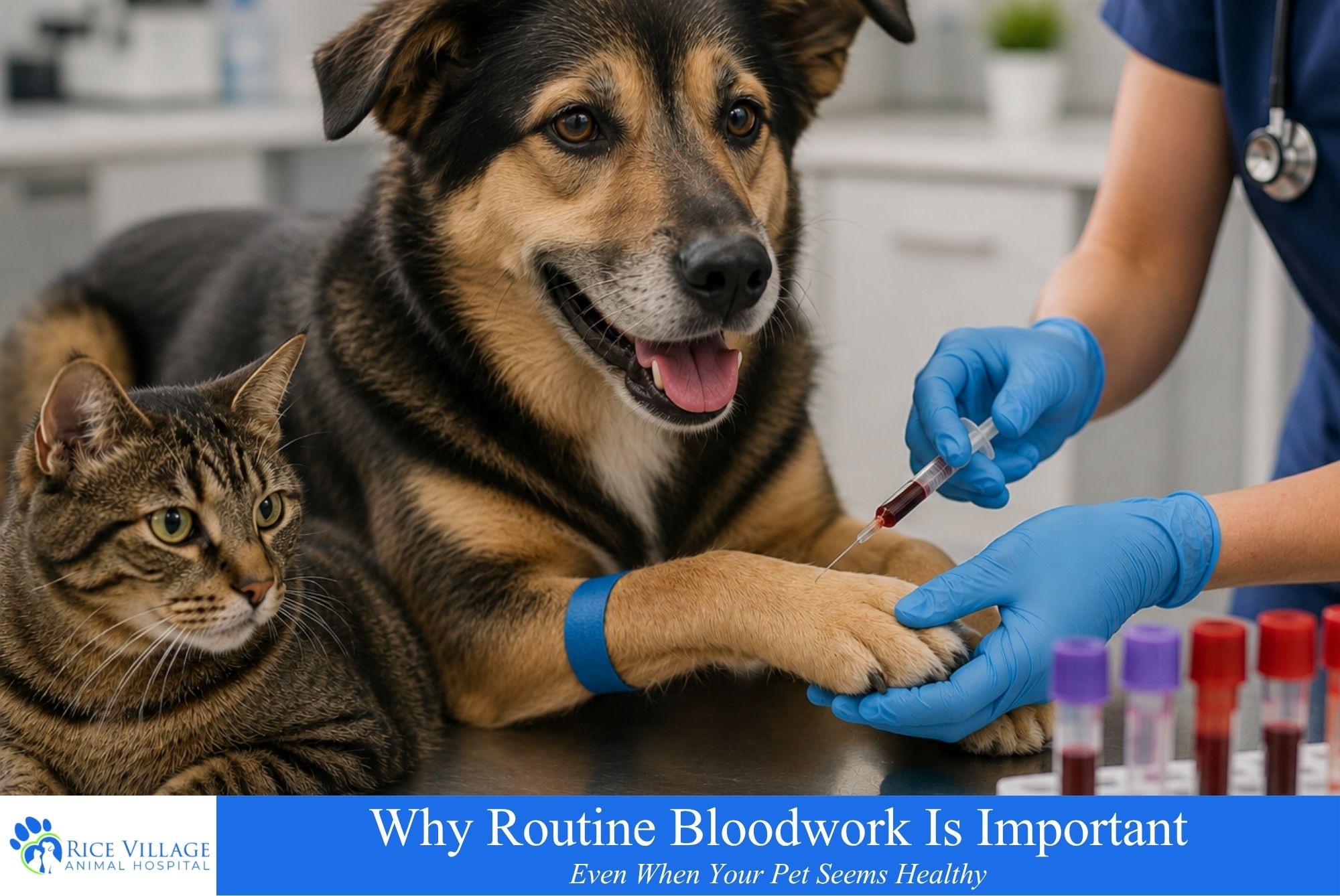
 Routine veterinary visits are one of the most effective ways to protect your pet’s long-term health, but physical examinations tell only part of the story. Many medical conditions develop silently, with no obvious symptoms until they become advanced. Wellness bloodwork allows veterinarians to identify hidden health concerns before they affect your pet’s quality of life.
At Rice Village Animal Hospital, preventive medicine is a cornerstone of lifelong pet care. Routine blood testing provides valuable insight into your pet’s internal health, helping our veterinary team detect disease earlier, establish healthy baselines, monitor aging pets, and create personalized healthcare plans for every stage of life.
What Is Wellness Bloodwork?
A Comprehensive Look Inside Your Pet’s Health
Wellness bloodwork refers to laboratory testing performed on healthy pets during routine wellness examinations. Unlike blood tests ordered because a pet is sick, preventive blood testing is designed to identify abnormalities before clinical signs appear.
Routine bloodwork commonly includes:
- Complete Blood Count (CBC)
- Blood Chemistry Panel
- Electrolyte Testing
- Kidney Function Evaluation
- Liver Function Testing
- Blood Glucose Measurement
- Protein Levels
- Thyroid Screening when appropriate
- Additional diagnostic testing based on age, breed, or medical history
These tests evaluate the function of multiple organ systems and provide a detailed picture of your pet’s overall health.
Many Diseases Develop Without Obvious Symptoms
Why Pets Often Hide Illness
Dogs and cats instinctively conceal signs of illness. In the wild, appearing weak could make an animal vulnerable, and that instinct remains even in household pets.
As a result, many conditions progress quietly for months or even years before owners notice changes.
Common hidden diseases include:
- Chronic kidney disease
- Liver disease
- Diabetes
- Thyroid disorders
- Early infections
- Immune disorders
- Anemia
- Certain cancers
- Electrolyte imbalances
- Metabolic disorders
Routine bloodwork can reveal these conditions while they are still highly manageable.
Early Detection Leads to Better Outcomes
Finding Problems Before Symptoms Begin
One of the greatest benefits of wellness blood testing is early diagnosis.
Detecting disease in its earliest stages allows veterinarians to:
- Begin treatment sooner
- Slow disease progression
- Prevent complications
- Improve quality of life
- Reduce long-term medical expenses
- Extend lifespan
For example, kidney disease often develops gradually. Bloodwork may identify declining kidney function months or even years before increased thirst, weight loss, or vomiting occur.
Similarly, diabetes can often be recognized before severe illness develops, allowing treatment to begin promptly.
Establishing Your Pet’s Normal Baseline
Every Pet Has Unique Normal Values
Laboratory reference ranges represent averages across many animals, but every pet has individual “normal” values.
Routine bloodwork performed while your pet is healthy creates a personalized baseline that allows your veterinarian to recognize subtle changes over time.
For example:
- A liver value that remains within the reference range but has doubled since last year may signal developing disease.
- Slight increases in kidney values may indicate early decline.
- Small changes in red blood cell counts may reveal chronic illness.
Comparing current results with previous bloodwork often provides more valuable information than a single test alone.
Monitoring Senior Pets More Closely
Aging Increases Health Risks
As pets grow older, their risk of chronic disease increases significantly.
Senior dogs and cats commonly develop:
- Kidney disease
- Arthritis
- Heart disease
- Diabetes
- Thyroid disorders
- Liver disease
- High blood pressure
- Hormonal imbalances
Because these conditions frequently begin without visible symptoms, many veterinarians recommend wellness blood testing every 6 to 12 months for senior pets.
More frequent monitoring allows veterinary teams to respond quickly to changes before illness becomes severe.
Bloodwork Helps Guide Safe Medical Decisions
Essential Before Surgery and Anesthesia
Routine blood testing is often recommended before surgical procedures and anesthesia.
Pre-anesthetic bloodwork evaluates:
- Kidney function
- Liver function
- Blood sugar
- Electrolytes
- Red blood cell levels
- White blood cell counts
- Platelets
These results help veterinarians determine whether anesthesia is safe and whether any adjustments are needed to anesthesia protocols or medications.
Pre-surgical testing improves patient safety and reduces the risk of unexpected complications.
Monitoring Pets Taking Long-Term Medications
Ensuring Treatments Remain Safe
Many medications require periodic blood testing to ensure they continue working safely.
Examples include medications for:
- Arthritis
- Seizures
- Thypertension
- Heart disease
- Thyroid disorders
- Immune-mediated diseases
- Chronic pain
- Long-term steroid therapy
Routine monitoring helps veterinarians detect medication side effects before they become serious and allows treatment plans to be adjusted when necessary.
Detecting Hidden Infections and Inflammation
Blood Cells Reveal Important Clues
The Complete Blood Count (CBC) evaluates several types of blood cells that provide valuable information about your pet’s health.
Bloodwork can identify:
- Infection
- Chronic inflammation
- Allergic responses
- Anemia
- Immune disorders
- Blood clotting abnormalities
- Bone marrow disorders
Even pets that appear healthy may show early laboratory changes that warrant further investigation.
Evaluating Organ Function
How Blood Chemistry Panels Protect Long-Term Health
Blood chemistry testing evaluates how well major organs are functioning.
These tests commonly assess:
Kidneys
- Blood urea nitrogen (BUN)
- Creatinine
- SDMA (when indicated)
Liver
- ALT
- AST
- ALP
- Bilirubin
Pancreas
- Glucose
- Pancreatic enzymes when appropriate
Proteins
- Albumin
- Globulins
- Total protein
Electrolytes
- Sodium
- Potassium
- Chloride
Abnormalities often appear long before clinical illness develops.
Supporting Breed-Specific Preventive Care
Some Breeds Benefit from Earlier Monitoring
Certain breeds have increased risks for inherited or age-related medical conditions.
Routine blood testing can be particularly valuable for breeds predisposed to:
- Liver disease
- Kidney disease
- Endocrine disorders
- Blood disorders
- Metabolic diseases
Your veterinarian can recommend customized screening based on your pet’s breed, age, lifestyle, and family history whenever available.
Bloodwork Supports Personalized Preventive Medicine
Tailoring Healthcare to Your Pet
Rather than applying the same recommendations to every patient, wellness bloodwork helps veterinarians personalize care.
Results may influence recommendations for:
- Diet
- Weight management
- Nutritional supplements
- Medication adjustments
- Diagnostic imaging
- Dental procedures
- Vaccination planning
- Follow-up testing
This individualized approach helps optimize lifelong health.
How Often Should Healthy Pets Have Bloodwork?
General Guidelines
Testing frequency depends on your pet’s age and medical history.
Typical recommendations include:
Puppies and Kittens
- As needed based on wellness exams or medical concerns
Healthy Adult Pets
- Approximately once yearly during routine wellness visits
Senior Pets
- Every 6 to 12 months
Pets with Chronic Medical Conditions
- As recommended by your veterinarian
Your veterinarian may recommend additional testing depending on breed risks, medications, or previous laboratory findings.
What to Expect During Blood Collection
A Quick and Minimally Stressful Procedure
Blood collection is typically fast and well tolerated by both dogs and cats.
During the appointment:
- A small sample of blood is collected from a vein.
- Most pets require only gentle restraint.
- The procedure usually takes only a few minutes.
- Many pets resume normal activities immediately afterward.
Results are reviewed by your veterinarian, who explains any findings and discusses recommendations for future care if needed.
Routine Bloodwork Is an Investment in Your Pet’s Future
Preventive healthcare is always more effective than waiting for illness to become obvious. Wellness blood testing provides valuable information that cannot be obtained through a physical examination alone. By detecting disease early, monitoring age-related changes, establishing healthy baselines, and guiding individualized treatment plans, routine bloodwork helps pets enjoy longer, healthier, and more comfortable lives.
At Rice Village Animal Hospital, our experienced veterinary team is committed to proactive, evidence-based care. Regular wellness bloodwork is one of the most important tools we use to protect your pet’s health today and for years to come.
Frequently Asked Questions
Why does my healthy pet need bloodwork?
Many diseases develop silently before causing noticeable symptoms. Wellness bloodwork can detect early abnormalities that allow treatment to begin sooner and improve long-term outcomes.
At what age should my pet begin routine blood testing?
Healthy adult pets often benefit from annual wellness bloodwork. Senior pets generally require testing every six to twelve months because the risk of chronic disease increases with age.
Is bloodwork painful for pets?
Blood collection involves a quick needle stick similar to a routine vaccination. Most pets tolerate the procedure very well and experience minimal discomfort.
Can bloodwork detect cancer?
Bloodwork alone usually cannot diagnose cancer, but it can identify abnormalities that suggest additional testing is needed. Early changes may prompt imaging or other diagnostics that lead to earlier diagnosis.
Should my pet fast before bloodwork?
Some blood tests require fasting for the most accurate results, while others do not. Your veterinary team will let you know if fasting is recommended before your appointment.
Can routine bloodwork detect kidney disease early?
Yes. Blood chemistry panels and specialized kidney markers can identify declining kidney function before pets develop obvious symptoms, allowing earlier treatment.
How long does it take to receive blood test results?
Some results are available the same day, while others may take one to several days depending on the specific tests performed.
Is wellness bloodwork recommended before anesthesia?
Yes. Pre-anesthetic bloodwork helps evaluate organ function and overall health, allowing veterinarians to create the safest anesthesia plan for your pet.
Can bloodwork monitor medications?
Absolutely. Many long-term medications require periodic blood testing to ensure they remain effective and do not adversely affect the liver, kidneys, or other organs.
Does every pet need the same blood tests?
No. Your veterinarian recommends testing based on your pet’s age, breed, lifestyle, medical history, and overall health to create a personalized preventive care plan.
Contact Information
Rice Village Animal Hospital
2348 Rice Blvd
Houston, TX 77005
Phone: (713) 527-0489
Website: https://rvahpet.com
Request An Appointment: https://rvahpet.com/appointments