
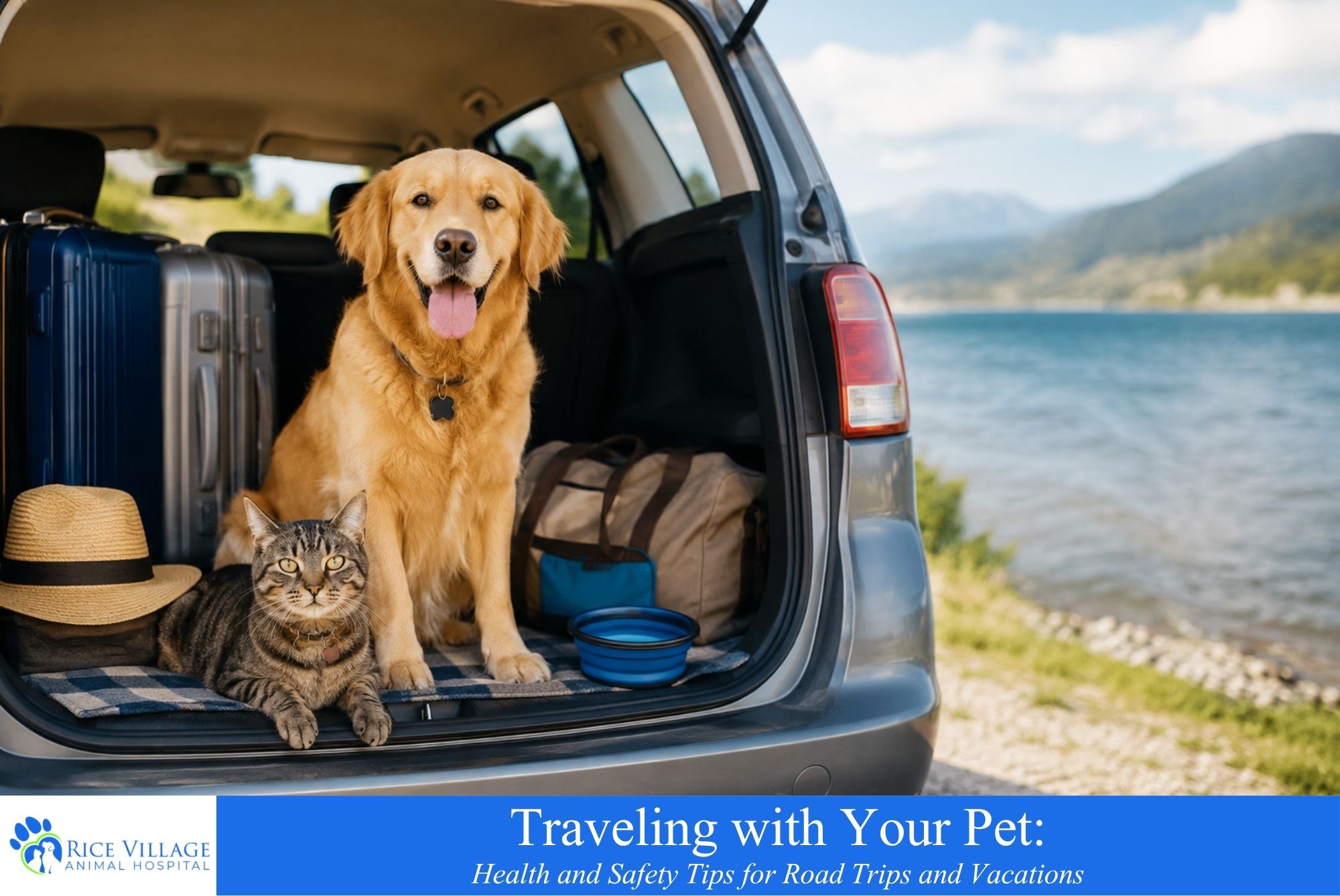
 Traveling with your pet can be one of life’s most rewarding experiences. Whether you’re planning a weekend road trip, a cross-country adventure, or a family vacation, proper preparation helps ensure your dog or cat stays healthy, safe, and comfortable throughout the journey. Pets thrive on routine, and changes in environment, transportation, and schedules can create stress if not managed appropriately.
At Rice Village Animal Hospital, we believe every trip should be enjoyable for both you and your pet. By planning ahead, scheduling a pre-travel veterinary examination, and packing the right essentials, you can reduce risks and make traveling much smoother. This guide covers everything pet owners should know before hitting the road or taking to the skies.
Why Preparation Matters Before Traveling with Your Pet
Travel introduces pets to unfamiliar sights, sounds, smells, temperatures, and environments. These changes can increase anxiety and expose pets to diseases, parasites, injuries, and other health risks.
Planning ahead allows you to:
- Ensure your pet is healthy enough to travel.
- Update required vaccinations.
- Obtain health certificates if necessary.
- Refill medications.
- Prepare for emergencies.
- Minimize travel-related stress.
- Protect your pet from regional parasites and diseases.
A veterinary visit before your departure is one of the most important steps in ensuring a successful trip.
Schedule a Pre-Travel Veterinary Examination
Confirm Your Pet Is Healthy for Travel
Even if your pet appears healthy, a physical examination can identify issues that could become more serious while traveling. Your veterinarian will evaluate:
- Heart and lung health
- Mobility and arthritis
- Respiratory conditions
- Chronic illnesses
- Hydration status
- Weight and body condition
- Dental health
- Overall fitness for travel
Senior pets, puppies, kittens, and pets with chronic medical conditions often benefit from additional planning before extended trips.
Update Vaccinations
Keeping vaccinations current helps protect your pet and other animals they may encounter.
Depending on your destination, your veterinarian may recommend:
For dogs:
- Rabies
- DHPP
- Bordetella (Kennel Cough)
- Leptospirosis
- Canine Influenza
- Lyme disease (when appropriate)
For cats:
- Rabies
- FVRCP
- Feline Leukemia (when appropriate)
Boarding facilities, hotels, campgrounds, and dog parks often require proof of vaccination before allowing entry.
Understanding Health Certificates
When Are Health Certificates Required?
If you’re traveling by airplane or crossing state or international borders, you may need an official Certificate of Veterinary Inspection (CVI), commonly called a health certificate.
Health certificates verify that your pet:
- Is free of contagious diseases
- Is healthy enough to travel
- Has current vaccinations
- Meets destination requirements
Requirements vary significantly depending on:
- Airline
- State
- Country
- Military travel regulations
- Hawaii travel restrictions
Because some certificates are only valid for a limited number of days before travel, schedule your veterinary appointment well in advance.
Car Safety for Dogs and Cats
Never Allow Pets to Roam Freely
Loose pets can distract drivers and become dangerous projectiles during sudden stops or accidents.
Safer travel options include:
- Crash-tested pet harnesses
- Secured travel crates
- Travel carriers
- Vehicle pet barriers for SUVs
Cats should always travel inside secure carriers.
Never Leave Pets in a Parked Vehicle
Temperatures inside vehicles can become life-threatening within minutes—even on mild days.
Heatstroke is a medical emergency that can quickly become fatal.
If temperatures are warm, always bring your pet with you or leave them safely at home.
Plan Frequent Rest Stops
On long road trips:
- Offer fresh water every few hours.
- Allow dogs to stretch and relieve themselves.
- Keep cats safely inside carriers during breaks.
- Avoid feeding large meals immediately before driving.
Regular breaks reduce stress and improve comfort.
Managing Travel Anxiety
Recognizing Signs of Stress
Some pets adapt easily, while others become anxious during travel.
Signs include:
- Excessive panting
- Trembling
- Vocalizing
- Pacing
- Drooling
- Vomiting
- Refusing food
- Restlessness
Early recognition allows intervention before anxiety worsens.
Helping Nervous Travelers
Several approaches can improve travel comfort:
- Practice short car rides before long trips.
- Use familiar blankets and toys.
- Maintain a calm environment.
- Play quiet music.
- Keep feeding schedules consistent.
- Exercise dogs before departure.
For pets with severe anxiety, your veterinarian may recommend prescription anti-anxiety medication or motion sickness medication.
Never give human medications unless specifically instructed by your veterinarian.
Don’t Forget Preventive Medications
Different regions expose pets to different parasites and infectious diseases.
Before traveling, ensure your pet is protected against:
- Fleas
- Ticks
- Heartworms
- Intestinal parasites
Traveling to wooded areas, beaches, hiking trails, or rural locations often increases parasite exposure.
Your veterinarian can recommend the most appropriate preventive medications based on your destination.
Packing Essentials for Your Pet
Food and Water
Pack enough of your pet’s regular food for the entire trip.
Sudden diet changes can cause:
- Vomiting
- Diarrhea
- Digestive upset
Bring:
- Food
- Bottled water if traveling to unfamiliar areas
- Food bowls
- Water bowls
- Measuring scoop
Medications
Pack enough medication for several extra days in case travel plans change.
Bring:
- Prescription medications
- Supplements
- Preventive medications
- Written medication instructions
- Copies of prescriptions if needed
Comfort Items
Familiar items reduce stress.
Include:
- Favorite blanket
- Bed
- Toys
- Treats
- Chew items
- Clothing if needed for cold weather
Travel Documents
Keep important documents together.
Include:
- Vaccination records
- Health certificate
- Microchip information
- Emergency contact numbers
- Veterinary records
- Pet insurance information
Having digital copies stored on your phone is also helpful.
Keep Identification Up to Date
Verify Microchip Registration
Microchips significantly improve the chances of recovering lost pets.
Before traveling:
- Confirm the microchip is registered.
- Verify your phone number.
- Update your address if necessary.
- Add emergency contacts.
Use Visible Identification
Every pet should wear a collar with:
- ID tag
- Owner’s phone number
- Temporary travel phone number if applicable
Proper identification provides immediate contact information if your pet becomes separated from you.
Finding Pet-Friendly Accommodations
Before booking:
- Confirm pets are allowed.
- Review breed or size restrictions.
- Understand additional fees.
- Identify nearby emergency veterinary hospitals.
- Locate nearby walking areas or pet relief stations.
Knowing where emergency veterinary care is available provides peace of mind during your travels.
Traveling by Air
Airline Considerations
Each airline has unique requirements regarding:
- Carrier size
- Breed restrictions
- Health certificates
- Vaccination documentation
- Age requirements
Always verify airline policies before booking your flight.
Some pets—particularly brachycephalic (short-nosed) breeds—may face additional travel restrictions due to increased respiratory risks.
Maintaining Your Pet’s Routine
Pets generally feel more secure when routines remain consistent.
Try to maintain:
- Regular feeding times
- Exercise schedules
- Bathroom breaks
- Sleep routines
- Medication schedules
Consistency helps reduce anxiety and supports overall well-being.
Prepare for Emergencies
Before leaving home:
- Locate emergency veterinary hospitals near your destination.
- Save their phone numbers.
- Know the nearest 24-hour emergency clinic.
- Carry a basic pet first aid kit.
- Have your veterinarian’s contact information readily available.
Preparation allows you to respond quickly if an unexpected illness or injury occurs.
When to Schedule a Veterinary Visit Before Traveling
Schedule an appointment several weeks before departure if your pet:
- Needs updated vaccinations.
- Requires a health certificate.
- Takes prescription medications.
- Experiences motion sickness.
- Has travel anxiety.
- Has chronic medical conditions.
- Is elderly.
- Is traveling internationally.
- Has not had a recent wellness examination.
Early planning helps prevent last-minute travel complications.
Travel Tips for a Safe and Enjoyable Vacation
Successful travel starts with preparation. A healthy pet, current vaccinations, secure transportation, proper identification, and a well-stocked travel bag help ensure a smoother journey for everyone involved.
Whether you’re exploring Texas or traveling across the country, Rice Village Animal Hospital is here to help prepare your companion for safe, healthy adventures.
Frequently Asked Questions
Does my pet need a health certificate for travel?
Some airlines, states, and international destinations require an official health certificate issued by a licensed veterinarian. Requirements vary, so check your destination well before your trip.
How far in advance should I schedule a travel exam?
Ideally, schedule your appointment several weeks before departure. This provides time for vaccinations, health certificates, medications, and any additional testing that may be required.
Can my pet ride in the front seat?
It is safest for pets to ride secured in the back seat using a crash-tested harness or inside a properly secured travel crate.
What should I do if my pet gets carsick?
Talk with your veterinarian before traveling. Prescription medications and travel strategies can help reduce motion sickness and anxiety.
Should I sedate my pet for travel?
Sedation is not appropriate for every pet and should only be used under veterinary guidance. Your veterinarian can recommend the safest options based on your pet’s health and travel plans.
How often should we stop during a road trip?
Most dogs benefit from breaks every two to four hours for water, exercise, and bathroom breaks. Cats should remain safely inside their carriers during stops unless they are securely harnessed in a controlled environment.
What should I pack for my pet?
Bring food, water, medications, vaccination records, identification tags, a leash, waste bags, bedding, toys, bowls, treats, and any comfort items your pet uses at home.
Is microchipping important before traveling?
Yes. A registered microchip greatly increases the likelihood of being reunited with your pet if they become lost during your travels.
Are there special travel concerns for senior pets?
Older pets may have arthritis, heart disease, or other chronic conditions that require additional planning. A veterinary examination before traveling is especially important for senior companions.
Should I visit a veterinarian after returning home?
If your pet develops coughing, vomiting, diarrhea, lethargy, limping, skin irritation, or unusual behavior after traveling, schedule a veterinary examination promptly.
Contact Information
Rice Village Animal Hospital
2348 Rice Blvd
Houston, TX 77005
Phone: (713) 527-0489
Website: https://rvahpet.com
Request An Appointment: https://rvahpet.com/appointments